history
The History of the Dior Saddle Bag: Galliano to Chiuri
By The Luxury Verdict Editorial Team · November 1, 2026

The Dior Saddle bag is one of fashion’s most recognizable silhouettes, yet its story is far more layered than the resale hype that surrounds it today. By the end of this article you will know who created the bag and when it first walked the runway, what visual cues sparked its distinctive shape, why a Helmut Newton photograph is often mentioned but never confirmed, how the bag slipped out of Dior’s collections in the mid-2000s, what prompted its 2014 vintage revival, and exactly how Maria Grazia Chiuri reshaped the icon for a 2018 re-launch. All of this is set against Dior’s broader design language, showing why the Saddle continues to feel both nostalgic and fresh.
Key takeaways
- John Galliano introduced the Saddle bag on the Spring-Summer 2000 catwalk, having joined Dior in 1996, and its immediate popularity kept it in production for several seasons1.
- The bag’s kidney-shaped silhouette and under-arm wear were inspired by Galliano’s cowboy-themed runway, with many observers linking the silhouette to Helmut Newton’s 1976 photograph Saddle I, a connection Galliano never confirmed5.
- After becoming an It-bag in the early 2000s, the Saddle faded from view by 2007, later reappearing on the resale market after Beyoncé was photographed with a vintage piece in 20142.
- Maria Grazia Chiuri’s 2018 re-issue enlarged the bag, added a cross-body strap, introduced the new Oblique canvas (re-branding the original Diorissimo print), and offered a wider palette of colours and embellishments4.
- Throughout its evolution the Saddle has remained a tribute to equestrian style, embodying Dior’s penchant for sculptural proportion, luxurious materials and a blend of heritage with contemporary flair3.
Origins and Galliano’s Vision
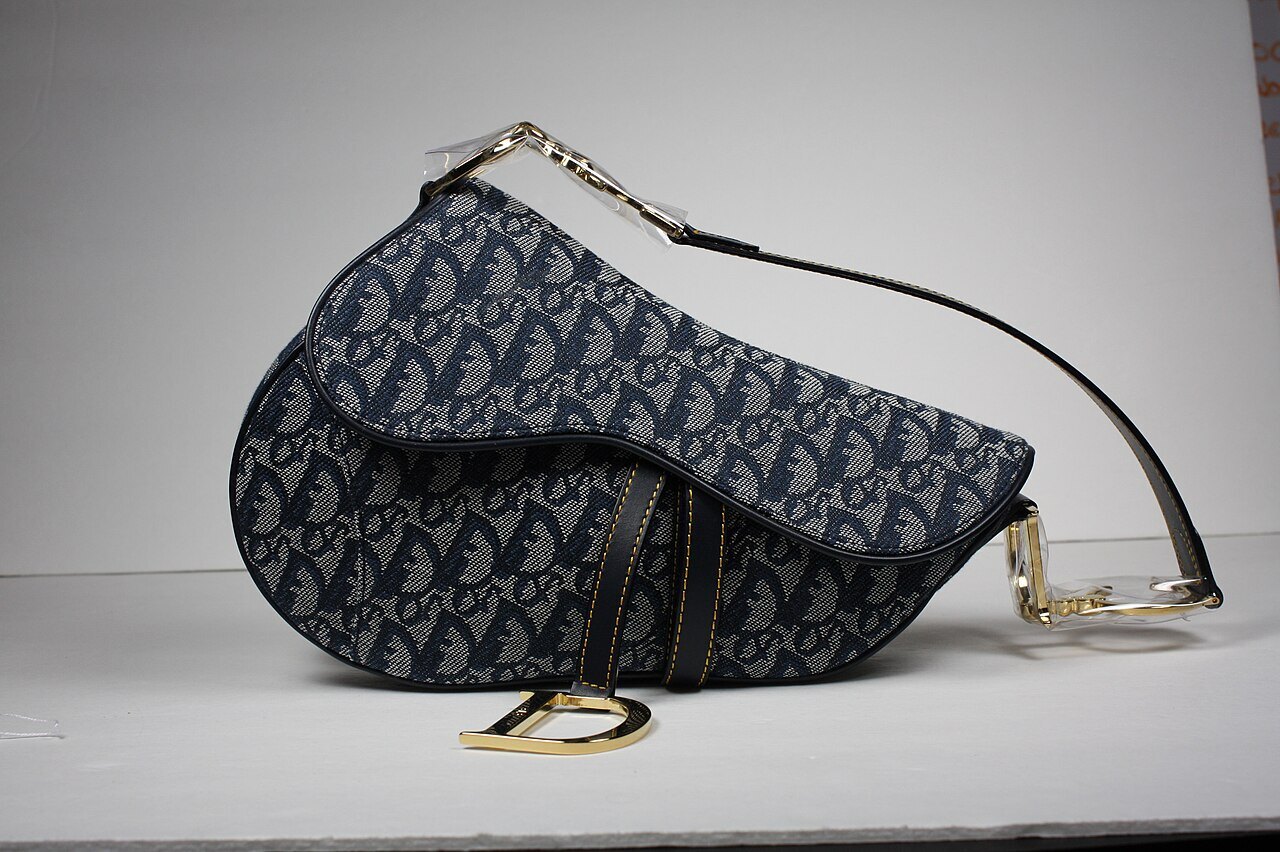
John Galliano arrived at the House of Dior in 1996, bringing with him a fresh emphasis on accessories that would soon reshape the brand’s ancillary offerings1. In 1999 Galliano conceived a bag that would echo the Western motifs permeating his Spring-Summer 2000 collection, a line that mixed hip-hop swagger, 1970s silhouettes and a distinct cowboy vibe2. The result was the Saddle bag, unveiled on the Spring-Summer 2000 catwalk and instantly dubbed an It-bag1.
The bag’s shape, often described as kidney-shaped, was designed to be worn short-strapped, tight against the under-arm, echoing a rider’s saddle strap3. Its D-shaped logo is stirrup-like, reflecting the bag’s equestrian tribute3. While Galliano never confirmed a specific source, many fashion historians have linked the silhouette to Helmut Newton’s 1976 photograph Saddle I, which features a similar stirrup-like form5. The V&A’s collection holds a blue Monogram canvas version from that debut season, measuring 17 cm in height and 27 cm in width, crafted from cotton, leather and made in France1.

The 2000s It-Bag Moment
The Saddle’s debut coincided with a cultural moment that amplified its visibility. A patterned version appeared on Carrie Bradshaw in Sex and the City (season three, episode five), cementing the bag’s status as a pop-culture must-have2. Celebrities such as Paris Hilton and Sienna Miller quickly adopted the piece, turning it into a staple of early-2000s red-carpet style4.
By 2001 Dior’s overall accessories sales had reportedly risen 60 percent, a figure covering all accessories rather than the Saddle alone5. Production continued in subsequent seasons because the design proved so popular1.
Galliano also experimented with a range of limited editions during his years at Dior. Variations included the classic Diorissimo logo canvas, a floral “Girly” print, a Daily Newsprint pattern, a tricolour Rasta motif, the whimsical “Adiorable” design and a sporty “Speedway” version, each offering a fresh visual twist while retaining the bag’s core silhouette2.
Quiet Years and Disappearance
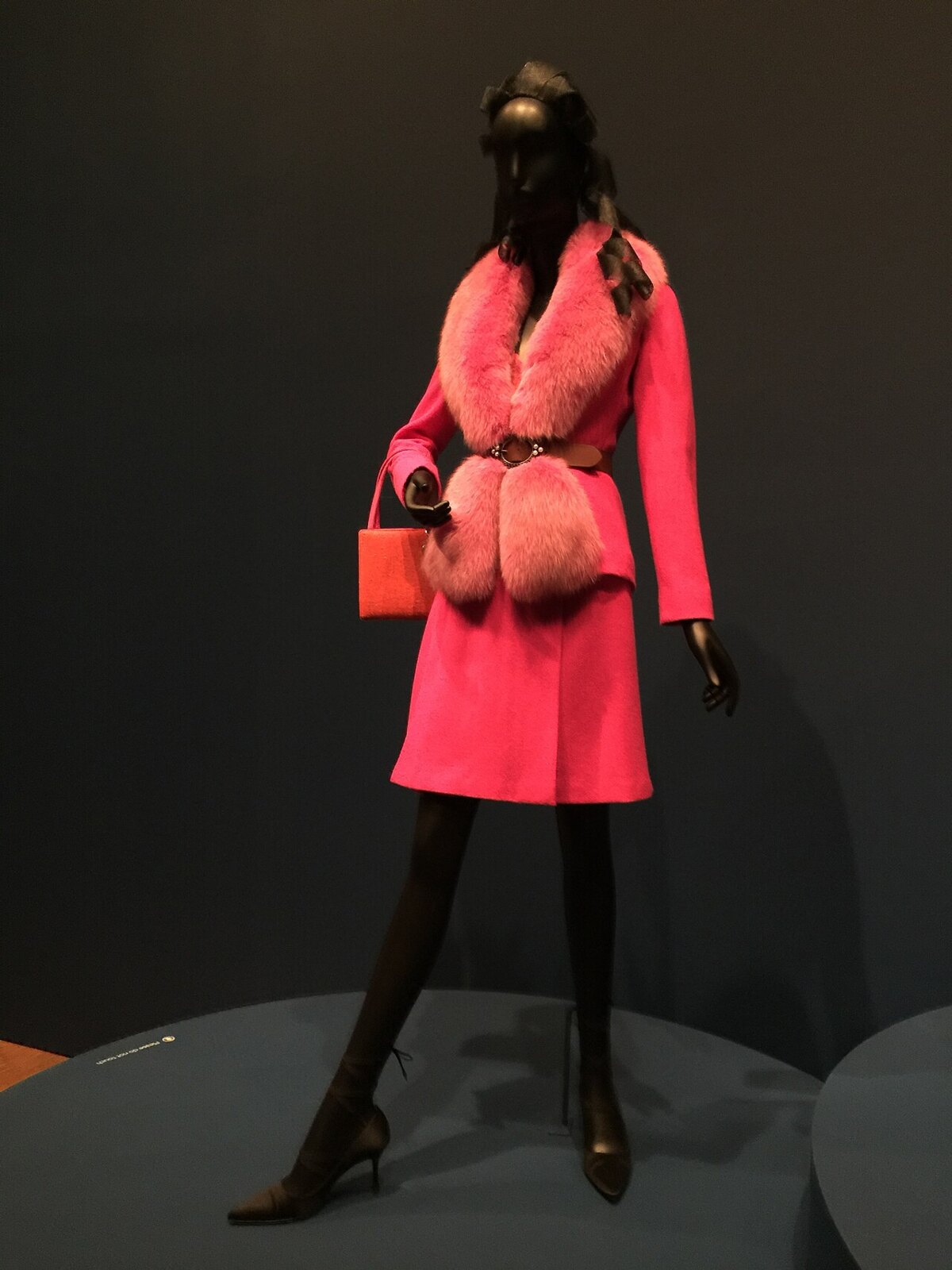
Despite its early triumph, the Saddle gradually faded from Dior’s runway agenda. By 2007 the bag had left Dior’s runways, and Raf Simons, Galliano’s successor, presented a radically different vision for the house that did not include the Saddle2.
Resurgence and the 2014 Vintage Moment
The bag’s dormancy ended in a subtle yet powerful way. In 2014 Beyoncé was photographed carrying a vintage Dior Saddle, a moment that sparked renewed interest among fashion insiders and collectors2. The sighting was followed by an increase in vintage Saddles appearing in fashion and on the resale market, laying the groundwork for Dior’s eventual decision to revive the silhouette officially.
Chiuri’s 2018 Re-Issue
Maria Grazia Chiuri, Dior’s first female creative director, announced a new iteration of the Saddle for the Autumn-Winter 2018 season1. In her press release Chiuri explained that she wanted the bag “larger and more robust, and very colourful, embroidered or beaded, so that it adapts to every situation like a chameleon”4. The 2018 version indeed arrived slightly larger than the original, offering a black leather option alongside the newly branded Oblique logo canvas, a re-imagining of the earlier Diorissimo print2.
Chiuri’s redesign also introduced functional updates. A cross-body strap allowed the bag to be worn slung under the arm or across the body, echoing Galliano’s original under-arm styling while adding modern versatility4. The re-issue was released in a broad palette: FashionUnited reported fifteen distinct styles, while Hypebae noted availability in twenty colours and designs, reflecting a strategic expansion of the bag’s visual language4.
The 2018 revival also appeared in Kim Jones’s first Dior Homme collection, underscoring the bag’s renewed relevance across both women’s and men’s lines3. Its presence in the Fall/Winter 2018 campaign further cemented the bag’s status as a contemporary Dior staple.
Design Language and Legacy
From Galliano’s original to Chiuri’s re-issue, the Saddle bag has consistently embodied Dior’s commitment to sculptural elegance and luxurious materiality. The original’s cotton-and-leather construction, combined with the distinctive 17 cm height and 27 cm width, created a proportion that feels both compact and statement-making1. The kidney shape, coupled with the D-logo stirrup motif, translates the house’s equestrian heritage into a modern accessory, a visual shorthand that aligns with Dior’s historic use of horse-related motifs.
Chiuri’s enlargement and the addition of embroidered or beaded detailing push the bag further into the realm of “chameleon” versatility, allowing it to shift from day-to-night, from casual street style to high-glamour events. The shift from the Diorissimo canvas to the Oblique print also reflects Dior’s broader strategy of updating iconic patterns while preserving brand DNA. Across both eras, the bag’s ability to be worn under the arm or across the body reinforces Dior’s emphasis on fluid, wearable luxury.
Answers to Common Questions
Who designed the Dior Saddle bag and when did it debut?
John Galliano designed the bag; it debuted on the Spring-Summer 2000 runway, following its conception in 199912.
What inspired the Saddle’s shape, and why is it called the Saddle?
The shape draws from Galliano’s cowboy-inspired collection, meant to be worn short-strapped under the arm, echoing a rider’s saddle strap. The D-shaped logo is stirrup-like, reflecting the bag’s equestrian tribute3.
Is the Helmut Newton photograph really the inspiration?
Many observers link the silhouette to Helmut Newton’s 1976 photograph Saddle I, noting the similar stirrup-like form, but Galliano never confirmed this connection5.
Why did the Saddle disappear and why did Dior bring it back?
The bag fell out of Dior’s runway line-up by 2007 when Raf Simons, Galliano’s successor, introduced a radically different aesthetic that did not include the Saddle2. Its revival was sparked by a 2014 vintage moment, Beyoncé’s public appearance with a vintage Saddle, and Chiuri re-issued an updated version in 201821.
How is Maria Grazia Chiuri’s 2018 Saddle different from Galliano’s original?
Chiuri’s version is slightly larger, offers a cross-body strap, introduces new colourways and embellishments, and replaces the original Diorissimo canvas with the Oblique logo canvas. The 2018 line offered fifteen distinct styles according to FashionUnited, while Hypebae noted availability in twenty colours and designs42.
How does the Saddle fit Dior’s design language?
The bag’s equestrian tribute, sculptural proportion, and luxurious materials echo Dior’s historic emphasis on refined elegance and heritage motifs. Its adaptable wearability and the 2018 updates, larger size, vibrant embellishments, and versatile strap, demonstrate Dior’s ability to reinterpret iconic pieces for contemporary audiences while staying true to the house’s core aesthetic3.
Closing Thoughts
From Galliano’s daring 2000 debut to Chiuri’s robust 2018 re-issue, the Dior Saddle bag illustrates how a single silhouette can navigate shifting creative visions, cultural moments and market dynamics while retaining its core identity. Its journey, from runway It-bag to vintage cult object and back to a modern staple, mirrors Dior’s broader narrative of honoring tradition while embracing evolution. As the bag continues to appear on red carpets, street style feeds and runway shows, its design legacy remains a testament to the house’s enduring capacity for reinvention.
Related Reading
Sources
- V&A: 'Saddle' bag by John Galliano for Dior (T.254-2019)
- TheRealReal: Back in the Saddle, the History of Dior's Iconic Bag (Oct 2018)
- Hypebae: The History of the Iconic Dior Saddle Bag (Oct 2018)
- FashionUnited: Dior's saddle bag returns after almost two decades (Jul 2018)
- Sotheby's: The Collector's Guide to Dior