history
The History of the Louis Vuitton Speedy: From Express to Icon
By The Luxury Verdict Editorial Team · November 1, 2026

The Louis Vuitton Speedy is more than a logo-stamped tote; it is a compact reinterpretation of the house’s early travel trunks that has been reshaped by cultural moments, material experiments and a handful of high-profile collaborations. By the end of this article you will know why the bag earned the “Speedy” moniker, how it differs from its larger sibling the Keepall, what Audrey Hepburn’s 1965 request added to the lineup, why the iconic monogram appears upside-down on one side, how the range of sizes and skins expanded from a single 30 cm canvas case to a full family that includes Nano, Mini HL and 40 cm versions, and what historical link ties the Speedy to the dome-shaped Alma.
Key takeaways
- Launched in 1930 as the Express, it was later renamed Speedy; Rebag suggests the name references the quicker travel of the time, while Sotheby’s says the design was intended to echo the era’s travel revolution and fast-paced lifestyle Sotheby’s.
- The Speedy was conceived as a smaller, everyday-ready version of the larger Keepall duffle Rebag.
- Audrey Hepburn’s 1965 request for a petite model produced the 25 cm Speedy Sotheby’s.
- A single-piece canvas cut forces the LV monogram to appear upside-down on one side of the bag Sotheby’s.
- Over the decades the Speedy grew from the original 30 cm to a full size matrix, including Nano, Mini HL, 33 cm and 40 cm, and embraced skins such as Damier Ebene, Damier Azur, Monogram Empreinte and Epi leather Sotheby’s.
Origin and the “Speedy” Name
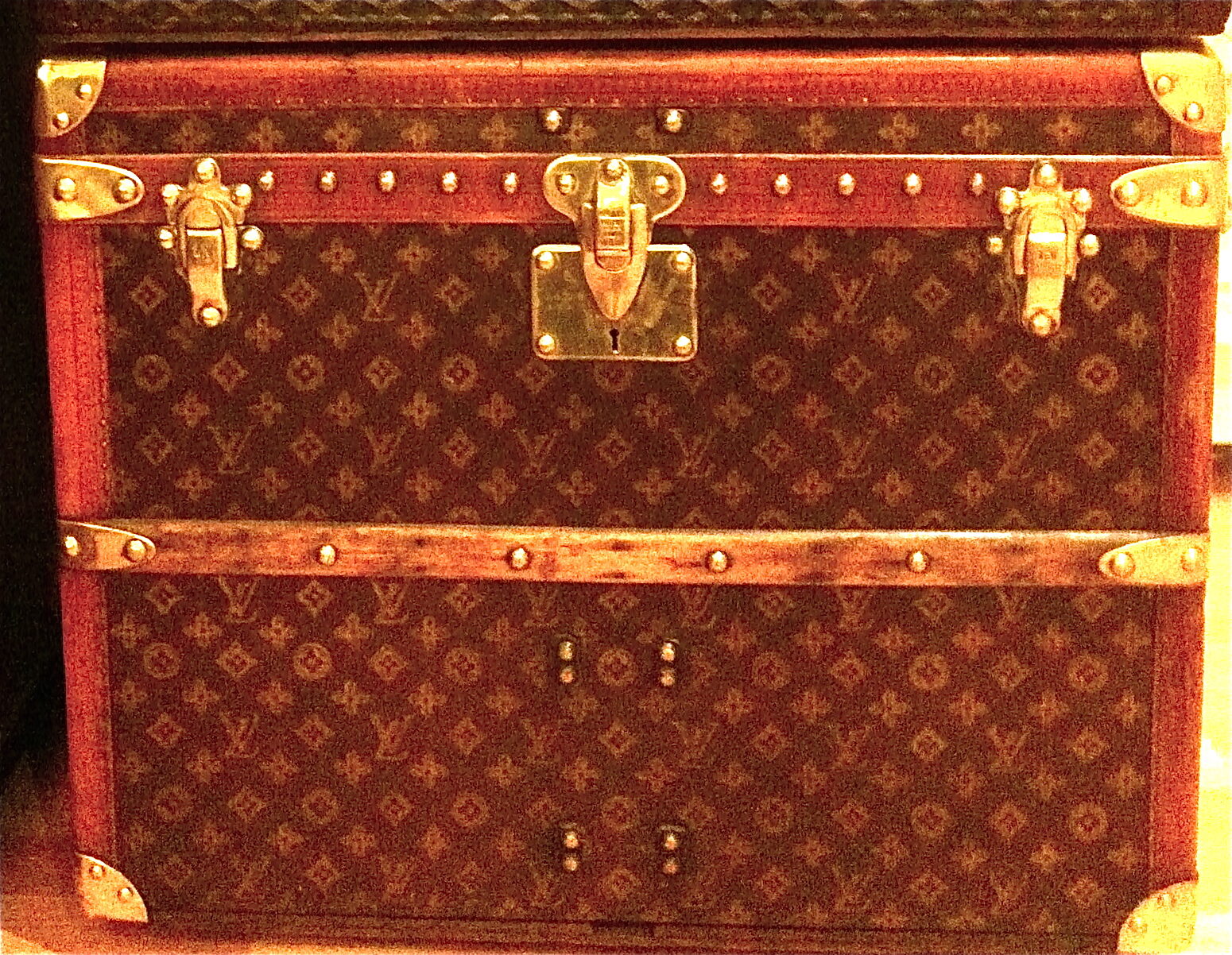
Louis Vuitton opened his first Paris shop in 1854; his flat-top trunk was introduced in 1858, establishing the trunk-making lineage the house’s bags grew from Wikipedia. The brand’s travel-bag portfolio included the Keepall, a larger duffle-style travel bag Rebag. In 1930 the house introduced a compact counterpart, initially called the Express, to meet the “travel revolution and fast-paced lifestyle of its era” Sotheby’s. The exact origin of the Speedy name is not documented; Rebag says the name reportedly came from the quicker travel of the time, and Sotheby’s says the Speedy was designed to reflect the travel revolution and fast-paced lifestyle of its era Sotheby’s.


From Keepall to Express/Speedy
The Keepall remained a spacious, travel-oriented duffle, while the Express/Speedy was engineered for everyday portability. Rebag describes the Speedy as “the same idea in a more compact, easier-to-carry form,” and Harper’s Bazaar adds that it was intended for daily use rather than long journeys Rebag. This functional shift meant a smaller, everyday-ready bag that moved the Speedy from luggage to a fashion staple.
Construction and Signature Details
A hallmark of the Speedy’s design is its construction from a single, continuous piece of canvas, which forces the LV monogram to appear upside-down on one side of the bag Sotheby’s.
On the Speedy 25, the hand-stitched Toron handles develop an amber patina with age, and “toron” comes from a Latin word meaning “small rope.” Harper’s Bazaar Toron handles, together with the bag’s gold- or silver-tone hardware, give the Speedy a tactile contrast between the rugged canvas and refined metal Rebag.


Size Evolution and Material Palette
When the Speedy debuted, it was offered in a single 30 cm size; 35 cm and 40 cm versions followed soon after, according to Sotheby’s Sotheby’s. The 1965 request from Audrey Hepburn for a bag that suited her petite frame resulted in the 25 cm Speedy Sotheby’s.
In recent years the range has broadened further. Rebag lists year-round sizes that now include Mini HL, Nano, 25, 30, 33 and 40 cm Rebag. The 2011 Speedy Bandoulière added an adjustable, detachable shoulder strap and distinctive leather strips with D-rings on the sides Sotheby’s.
Materially, the Speedy began on a plain, logo-less coated canvas; the iconic Monogram canvas arrived a year later in 1931 Sotheby’s. The Monogram itself was created by Georges Vuitton in 1896, drawing on Japanese family crests (mon) that were fashionable during the late Victorian era Wikipedia. Over the decades the bag has been produced in a variety of skins, including Damier Ebene, Damier Azur, Monogram Empreinte and Epi leather Sotheby’s. The bag’s continuous-canvas cut ensures the upside-down monogram remains a visual cue across the collection.
Artistic Collaborations and Variants
The Speedy’s clean silhouette has made it a favorite canvas for artists. Harper’s Bazaar notes Stephen Sprouse’s graffiti-styled Speedy in 2001 and again in 2009, while Takashi Murakami’s early-2000s partnership produced the candy-coloured Multicolore Speedy Harper’s Bazaar. Yayoi Kusama’s spotted reinterpretation and later collaborations with Urs Fischer, Richard Prince and Sofia Coppola are also listed by Sotheby’s Sotheby’s.
In 2013 the Speedy Cube, a boxy reinterpretation that pushed the bag’s geometry, was introduced Sotheby’s. These collaborations demonstrate the Speedy’s capacity to absorb bold artistic statements without losing its core construction logic.
Frequently Asked Questions
Why is it called the Speedy?
The bag debuted as the Express in 1930 and was later renamed Speedy; Rebag suggests the name references the quicker travel of the time, and Sotheby’s says the design was meant to reflect the travel revolution and fast-paced lifestyle of its era Sotheby’s.
What is the difference between the Speedy and the Keepall?
The Keepall is a larger duffle-style travel bag, whereas the Speedy (originally the Express) was a compact, everyday-ready version meant to be carried by hand and later adapted with a shoulder strap Rebag; Harper’s Bazaar emphasizes the Speedy’s focus on daily use rather than travel Harper’s Bazaar.
What did Audrey Hepburn have to do with the Speedy 25?
In 1965 Hepburn asked Louis Vuitton for a smaller bag that would suit her petite frame; the house responded with a 25 cm version that became a lasting size in the Speedy line Sotheby’s.
Why is the monogram upside down on one side of the Speedy?
The bag is cut from one continuous piece of canvas, so the monogram appears upside down on one side of the bag Sotheby’s.
How did Speedy sizes and materials change over the decades?
Starting with a 30 cm original, the line quickly added 35 cm and 40 cm sizes, then the 25 cm Hepburn model. Modern offerings include Nano, Mini HL, 33 cm and the original sizes, while material options expanded from plain coated canvas to Monogram canvas (introduced 1931), Damier Ebene, Damier Azur, Monogram Empreinte and Epi leather Sotheby’s.
What is the connection between the Speedy and the Alma?
Sotheby’s links the Speedy to Gabrielle Chanel’s 1925 request for a dome-shaped everyday bag, the Squire, which was approved for mass production in 1934 and renamed the Alma by 1955.
Closing Thoughts
The Louis Vuitton Speedy endures because it marries functional ingenuity, a single-piece canvas cut, a sturdy yet elegant handle, and a size system that adapts to changing lifestyles, with a visual language that remains instantly recognizable. Its lineage from the Keepall, its partnership with cultural icons, and its material evolution all reinforce a narrative of continual refinement rather than radical reinvention. As new collaborations reinterpret the classic shape, the Speedy’s core construction, upside-down monogram, Toron rope and timeless proportions keep the bag anchored to its 1930 origins while allowing each generation to claim it as their own.


