history
The History of the Gucci Jackie: From Constance to Jackie 1961
By The Luxury Verdict Editorial Team · November 1, 2026

The Gucci Jackie is one of fashion’s most enduring silhouettes, yet its birth-date, original name and even the details of its signature hardware are subjects of lively debate. By the end of this article you will know why the bag carries Jackie’s name, what it was called before the renaming, how its launch is dated variously to the 1950s or to 1961, what the iconic piston lock actually is, and how three creative directors, Tom Ford, Frida Giannini and Alessandro Michele, each reshaped the model. You will also see how the 2020 “Jackie 1961” re-issue compares with the earliest versions, and why the bag’s half-moon shape continues to captivate collectors and connoisseurs alike.
Key takeaways
- Harper’s Bazaar Malaysia says the bag debuted under the name Constance in 1961; Bustle says it was released in 1961 under the internal code G1244. Icon-Icon cites earlier design concepts from 1950 and 1955, and the V&A places the original in the 1960s132.
- It became known as the Jackie after Jacqueline Kennedy was photographed with it repeatedly; the V&A confirms the name derives from her fame, and Bustle says the bag was officially renamed Jackie 1961 in 202024.
- The original hardware is a piston-shaped push-lock with rounded edges; later versions swapped it for a geometric buckle (Tom Ford, 1999) or a shiny gold piston lock (Alessandro Michele, 2020)13.
- Redesigns introduced new materials and proportions: Harper’s Bazaar notes Giannini’s 2009 “New Jackie” enlarged the bag, softened its leather, and reinstated piston detailing; Icon-Icon adds that Giannini introduced a wider strap, leather tassels and bamboo detailing. The V&A’s 2014 “New Jackie” kept the curved silhouette but used a bamboo fastening132.
- Michele’s 2020 revival offered mini, small and medium sizes in natural grain leather, patent leather and GG Supreme canvas, with a removable shoulder strap in leather or chain; Harper’s Bazaar says the version was the closest to the 1961 original41.
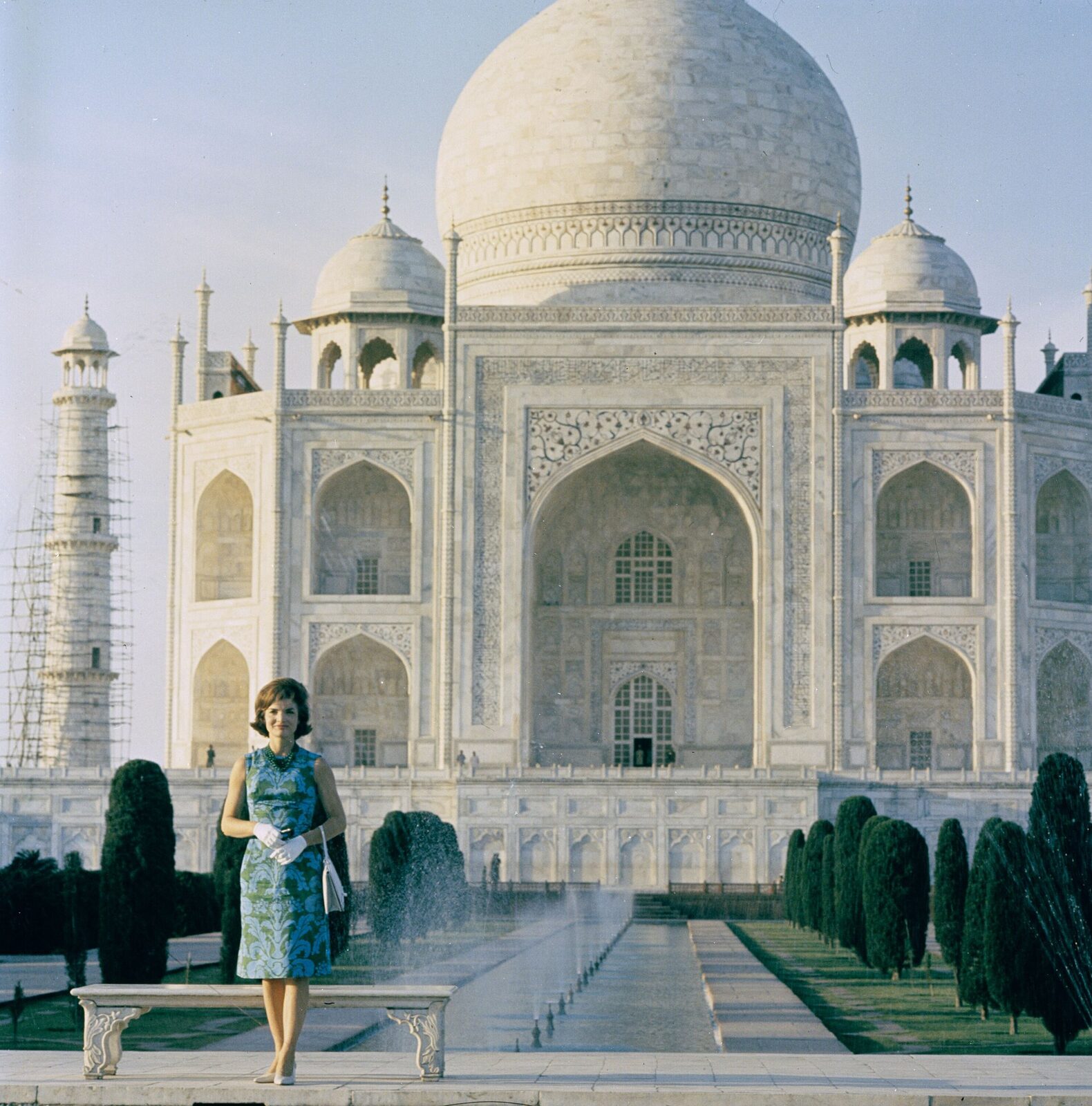
Origins and early naming
The story begins with a bag that Harper’s Bazaar Malaysia identifies as Constance, launched in 1961. Bustle notes it was released in 1961 under the internal code G124414.
Icon-Icon, however, traces the design lineage further back. Its timeline lists 1950 as the year the Constance first appeared, while the accompanying text says the bag was first conceived in 19553. The Victoria & Albert Museum (V&A) does not pin an exact year but places the original Jackie in the 1960s2. These discrepancies illustrate how the bag’s origin is recorded differently across archives, with each source emphasizing a distinct moment in the model’s evolution.


Design language: the half-moon silhouette and piston lock
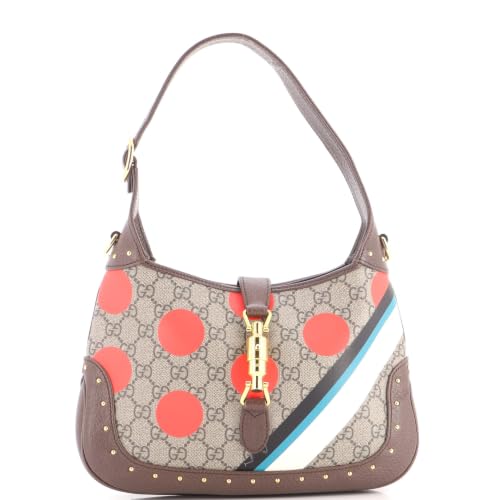
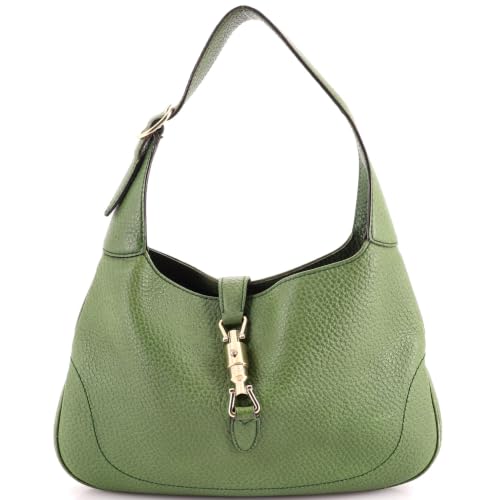
From its inception, the Jackie was defined by a half-moon shape that drapes over the shoulder, creating a soft, almost sculptural profile. Harper’s Bazaar notes that the bag’s minimal branding, “few visible logos”, made it a “recognised mainly by people in the know”1.
The piston-shaped closure is the most distinctive hardware element. Icon-Icon describes the original closure as a push-lock with rounded edges3. This subtle mechanism not only secured the contents but also reinforced the bag’s sleek, understated aesthetic.
Conflicting chronologies
The question “When was the Jackie first made?” does not have a single answer in the historical record. Three timelines emerge:
- 1950 - Icon-Icon’s date list places the Constance in this year.
- 1955 - The same source’s narrative claims the design was first conceived then, implying a development phase that preceded production.
- 1961 - Both Harper’s Bazaar Malaysia and Bustle agree on a first release in this year, under the name Constance and code G124414.
The overlapping dates reflect how fashion houses often iterate on a silhouette over several years before a definitive launch.

The name “Jackie” and its cultural moment
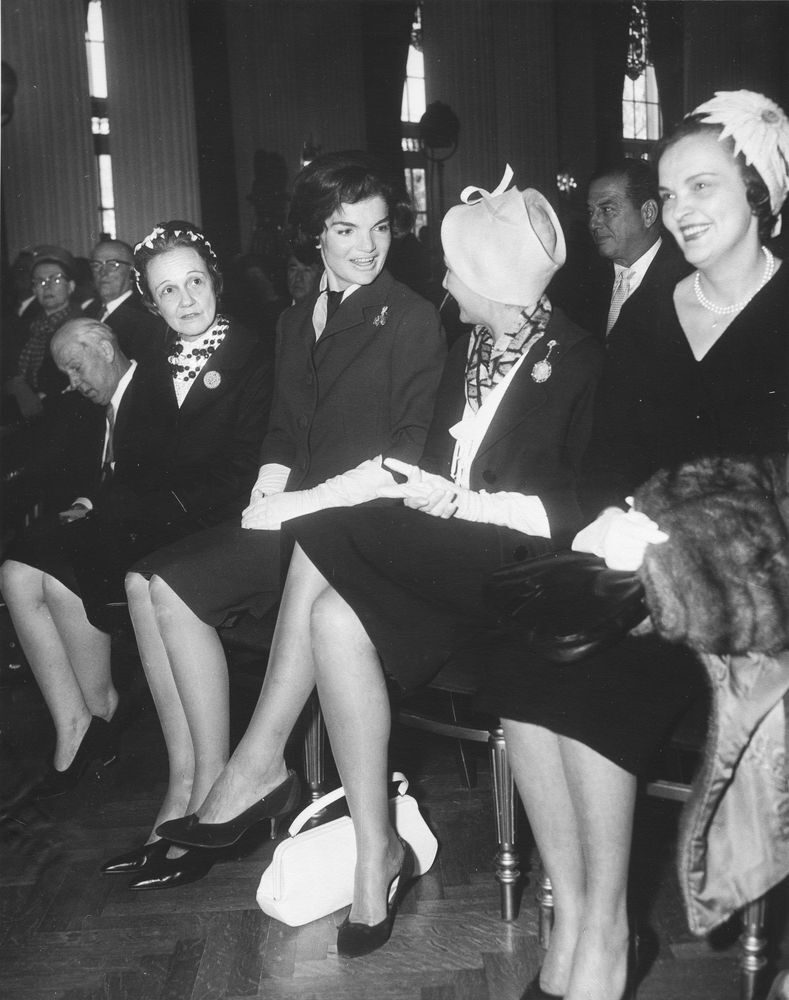
The bag’s moniker is directly tied to Jacqueline Kennedy. The V&A explains that the Jackie “became famous through Jacqueline Kennedy, who gave the bag its name”2. Bustle adds that Kennedy was photographed with the bag so often that Gucci officially renamed it Jackie 1961 in 2020, and that her Manhattan lifestyle in the 1970s cemented the bag’s iconic status4. Harper’s Bazaar further records that the Jackie was “one of the most photographed of the 1970s,” even noting a 1971 photograph of writer Samuel Beckett with a Jackie in Genoa1.
These anecdotes illustrate how a celebrity’s repeated association can transform a product’s identity, turning a functional accessory into a cultural symbol.
Redesigns through the decades
Tom Ford (1999)
When Tom Ford took the reins at Gucci, he introduced a 1999 redesign. Harper’s Bazaar reports that Ford replaced the piston lock with a geometric buckle1. In contrast, Icon-Icon emphasizes that Ford’s version updated the bag with new colours, motifs and limited editions, without specifying a hardware change3. The divergence shows that Ford’s impact is remembered both for aesthetic refreshes and for a specific hardware alteration, depending on the source.
Frida Giannini (2009)
Giannini’s 2009 “New Jackie” enlarged the silhouette and softened the leather, according to Harper’s Bazaar, which also notes a return to piston detailing1. Icon-Icon adds that Giannini introduced a wider strap, leather tassels and bamboo detailing, further differentiating the newer model from its predecessor3. Both accounts agree that Giannini’s version was larger and more tactile, signaling a shift toward a more relaxed, bohemian vibe while still honoring the original hardware.
V&A “New Jackie” (2014)
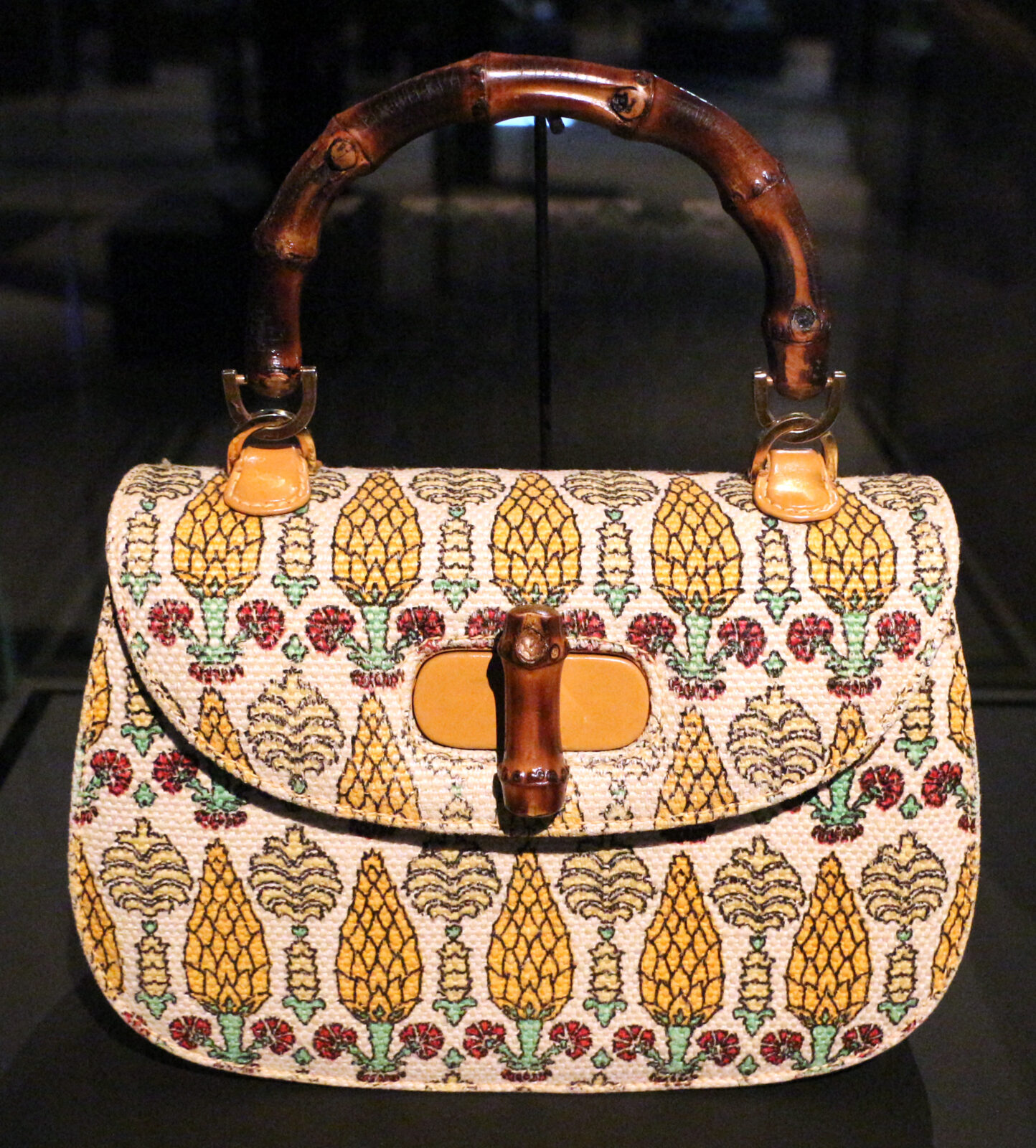
The V&A’s 2014 “New Jackie”, gifted by Gucci for the exhibition The Glamour of Italian Fashion 1945-2014, is an oversized shoulder bag crafted in Italy from leather, bamboo and metal. It retains the curved silhouette and features a bamboo fastening that echoes the original shape2. This museum piece underscores how the model can be reinterpreted with different materials while preserving its iconic geometry.
Alessandro Michele (2020)
Alessandro Michele’s 2020 revival debuted at the Men’s Fall 2020 show in Milan. Bustle describes the launch as offering mini, small and medium sizes in natural grain leather, patent leather and GG Supreme canvas, each with a longer removable shoulder strap in leather or chain4. Harper’s Bazaar adds that Michele’s version was the closest to the 1961 original, drawing inspiration from a vintage bag in his personal archive, featuring a smaller body, candy-coloured shades and a gold piston lock1. The dual description highlights both the size diversification and the deliberate nod to the bag’s earliest form.
The 2020 “Jackie 1961” versus the original
Comparing the 2020 re-issue with the earliest 1961 model reveals core differences:
- Size spectrum - Michele introduced a mini, joining the small and medium sizes listed among the three current sizes.
- Hardware finish - The original piston lock was a push-lock with rounded edges, whereas the 2020 version features a shiny gold piston lock, accentuating the bag’s luxury cue while preserving the mechanical silhouette.
Despite these updates, Michele’s design deliberately re-emphasized the half-moon silhouette and the piston mechanism, positioning the 2020 Jackie as a faithful homage rather than a radical reinterpretation.
Answering common questions
Why is it called the Jackie?
The name derives from Jacqueline Kennedy, whose frequent public appearances with the bag led Gucci to rename it after her. The V&A confirms the naming origin, and Bustle says the bag was officially renamed Jackie 1961 in 202024.
What was the Gucci Jackie called before it was renamed?
It launched as the Constance, identified by Harper’s Bazaar Malaysia as the 1961 release name; Bustle notes it was released in 1961 under the internal code G124414.
When was the Jackie first made: the 1950s or 1961?
Three timelines exist: Icon-Icon lists 1950 and 1955 as early design dates; Harper’s Bazaar and Bustle record a 1961 first release under the Constance name and code G1244; the V&A situates the original in the 1960s.
What is the piston lock on the Jackie?
It is a push-lock with rounded edges, securing the bag while maintaining a sleek profile. This hardware was a hallmark of the original design, later replaced by a geometric buckle (1999) and revived in gold (2020)31.
How did Tom Ford, Frida Giannini and Alessandro Michele each change the Jackie?
- Tom Ford (1999): Swapped the piston lock for a geometric buckle and introduced new colours and limited-edition motifs13.
- Frida Giannini (2009): Produced a larger, softer bag, reinstated piston detailing, added a wider strap, leather tassels and bamboo accents13.
- Alessandro Michele (2020): Offered mini, small and medium sizes, introduced candy-coloured leathers, and equipped the bag with a shiny gold piston lock, positioning the line as the closest modern echo of the 1961 original41.
What is the difference between the original Jackie and the Jackie 1961 of 2020?
The 2020 version expands the size range, adds pastel hues, and upgrades the piston lock to a gold finish, while retaining the half-moon silhouette and the essential piston mechanism that defined the 1961 model.
Closing thoughts
The Gucci Jackie’s journey, from a modest 1961 Constance to a museum-worthy artifact and a 2020 revival, illustrates how a single silhouette can be continuously reinterpreted while preserving its core identity. Conflicting origin dates underscore the fluid nature of fashion archives, and the bag’s association with Jacqueline Kennedy demonstrates the power of cultural icons to rename and re-contextualize a product. Each creative director respected the bag’s fundamental geometry, the half-moon shape and piston lock, yet injected their own era’s aesthetic, whether through Tom Ford’s geometric hardware, Frida Giannini’s bamboo accents, or Alessandro Michele’s pastel palette and mini size. The result is a timeless accessory that remains instantly recognizable to those “in the know,” while inviting new generations to discover its storied past.